As civil engineering looks toward the future, the integration of biological components into structural materials marks a paradigm shift in urban development. Self-healing concrete—specifically through the use of calcium-producing bacteria—represents one of the most promising technological leaps in modern construction.
The Biological Matrix
Traditional concrete, while compressive and robust, is highly susceptible to tensile stress, leading to micro-fissures. When exposed to water and environmental elements, these cracks expand, ultimately compromising structural integrity. Our field testing demonstrates that incorporating Bacillus strains, dormant within biodegradable capsules, fundamentally alters this lifecycle.
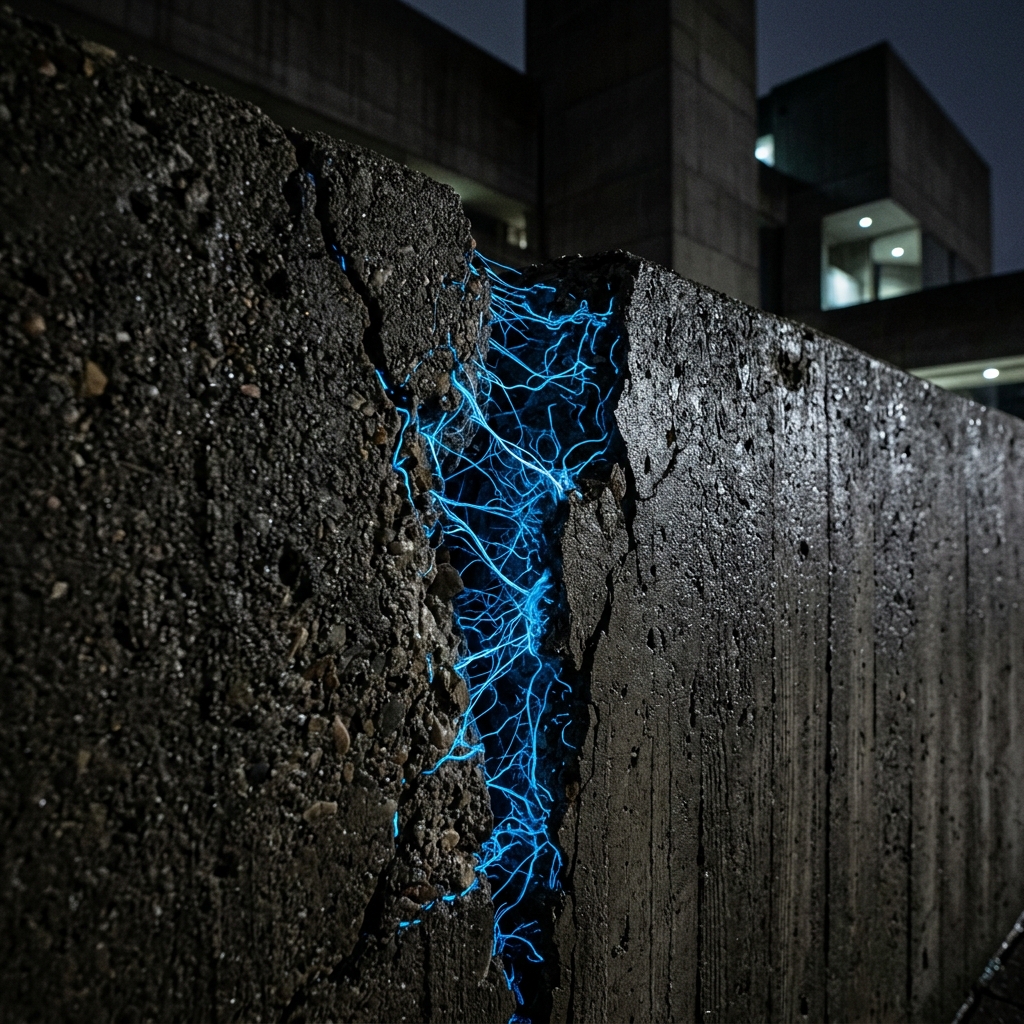
Upon fissure formation, water infiltration dissolves the capsules. The bacteria awaken from dormancy, feeding on integrated calcium lactate to precipitate limestone (calcium carbonate). This automated repair mechanism visually manifests as microscopic, glowing bioluminescent veins sealing the breach—a process that not only restores structural strength but drastically reduces long-term maintenance costs.
Application in High-Risk Environments
Deploying this bio-concrete in high-stress zones—such as deep-sea retaining walls or earthquake-prone bridge pylons—provides an unprecedented safety margin. The infrastructure essentially "heals" itself before a catastrophic failure can cascade through the structural network. The implication for smart cities is clear: dynamic, living structures capable of proactive resilience.